📍 Proudly serving Tempe, Mesa, Phoenix, Chandler, Gilbert & surrounding areasCall or Text 24/7: 480-631-3899
Guides

Is the Water in Tempe Safe to Drink?

Tempe Water Filtration helps Tempe households understand the difference between water that is legally compliant and water that feels right for daily drinking. The local team tests and treats water every week across the Kyrene Corridor, Downtown Tempe, South Tempe, and neighborhoods bordering Papago Park. This guide explains why Tempe tap water can meet Safe Drinking Water Act standards while still containing arsenic, PFOA/PFAS, disinfection byproducts, chlorine byproducts, and hard minerals that homeowners may want to reduce. Use it to decide when city data is enough and when a tap-level test, reverse osmosis system, NSF-certified pitcher, or whole-home treatment makes sense.

Key Takeaways

  • Yes. Tempe's water is legally safe under EPA and Arizona Department of Environmental Quality rules, but legal compliance is not the same as contaminant-free drinking water.
  • Independent water quality data flags arsenic, PFOA/PFAS, and disinfection byproducts as the main health-guideline concerns to compare against Tempe's report.
  • Tempe water comes from Salt River Project and Central Arizona Project sources, is treated through the regional Val Vista Water Treatment Plant, and is typically hard at 12 to 17 grains per gallon.
  • Use Tempe's annual report and public system ID AZ0407100 as starting points, then test the tap before choosing reverse osmosis, an NSF-certified pitcher, or whole-home treatment.

Three Ways to Read This Answer

Legal But Not Contaminant-Free

Tempe's municipal water meets enforceable federal and state standards, so the direct answer is yes by law. The practical decision is whether stricter health-guideline concerns matter for daily drinking in your household.

Source and Hardness Factors

Source blending, distribution time, local hardness, and older pipe materials can change what reaches the glass. Those factors explain why two compliant Tempe homes can have different scale, skin and hair effects, and testing results.

Test Then Filter

Start with the city report, then test at the tap if your household has health concerns, older plumbing, or hard-water scale issues. Match the result to drinking-water filtration, reverse osmosis, or whole-home hardness treatment.

Inspection Images for Tempe Water

Lab Bottle at the Kitchen Tap

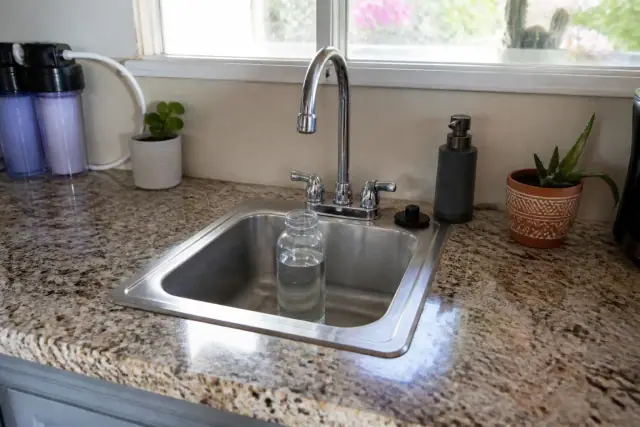
Clear glass water sample bottle under a chrome kitchen faucet on a granite countertop in a home in Tempe, AZ.

A sample taken where the household drinks water shows whether the concern is present at the point of use. This is the right image for questions about arsenic, PFOA/PFAS, and disinfection byproducts.

Hard Water Scale on Fixtures

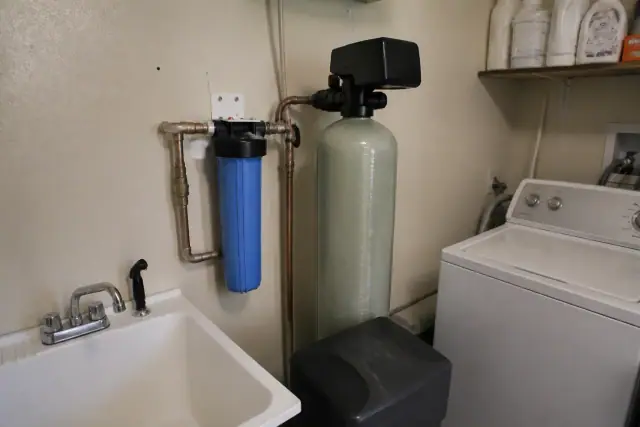
Water softener system installed in a laundry room in Tempe, AZ.

White scale around faucets and shower glass helps show the difference between water safety and hard-water comfort. Tempe's 12 to 17 grains per gallon hardness affects plumbing and appliances even when the water is legally safe.

Under-Sink Reverse Osmosis Unit

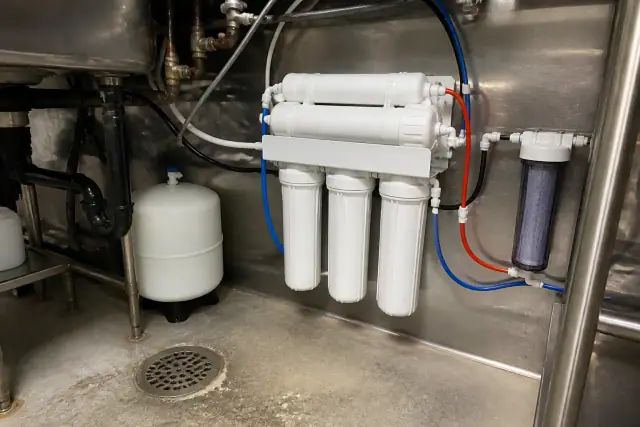
Under-sink reverse osmosis water filtration system installed in a Tempe, AZ restaurant kitchen.

An under-sink reverse osmosis setup is a practical visual for drinking-water concerns rather than whole-home hardness. It matches the draft's recommendation for reducing arsenic, PFOA, and chlorine byproducts at the tap.

Tempe Water Safety Snapshot

Best First Check

Confirm whether you are looking at legal compliance, health-guideline concerns, or tap-level symptoms. Tempe's Consumer Confidence Report shows compliance, while a home test can catch plumbing and filtration issues at the fixture.

What Changes the Answer

Plumbing age, source blend, distribution time, seasonal hardness, and household vulnerability can make citywide data feel different at one address. Infants, pregnant women, chemotherapy patients, and people with autoimmune conditions may use a more cautious threshold.

When to Add Filtration

Consider filtration when arsenic, PFOA/PFAS, chlorine byproducts, taste, odor, or hard-water scale matter to your household. A pitcher, under-sink reverse osmosis unit, or whole-home system should match the specific concern.

What to Avoid

Do not assume a legal compliance report means your kitchen tap is contaminant-free. Avoid choosing equipment before you know whether the main concern is drinking water, whole-home hardness, or older plumbing.

Filtration Planning Matrix

Tempe Water ConcernWhat the Draft SupportsPractical Action
Legal safetyTempe meets federal and state standards under the Safe Drinking Water Act.Review the annual city report for regulated-contaminant data.
Health-guideline concernsArsenic, PFOA/PFAS, and disinfection byproducts are the main contaminants to compare against stricter guidance.Test drinking water at the tap before choosing a filter.
Hard waterLocal hardness typically runs 12 to 17 grains per gallon.Compare drinking-water treatment with whole-home scale control.
Drinking-water filtrationReverse osmosis or an NSF-certified pitcher can reduce arsenic, PFOA, and chlorine byproducts.Match the filter type to the contaminant and where you use the water.

What This Means for Tempe

Tempe's water is legally safe to drink because it meets enforceable federal and state Maximum Contaminant Levels, and the supply is described as chlorinated and UV-treated. That does not mean every contaminant is absent or that every household has the same risk tolerance. The practical question is whether your kitchen tap is clean enough for daily use over 20 or 30 years, especially if children, pregnant women, or immune-compromised family members rely on it. For many homes, the next action is to verify the actual tap and add targeted filtration for drinking water or hardness control.

Factors That Change the Answer

Citywide compliance starts at the treatment and distribution system, but household conditions can change the water that reaches the glass. Older homes built before the 1980s near Mill Avenue and Rural Road may still have galvanized or lead-soldered pipe segments, and water that sits longer in distribution lines can form more trihalomethanes as chlorine reacts with organic matter. Seasonal blending between Salt River Project surface water and Central Arizona Project Colorado River water can also shift minerals and hardness month to month. Private wells, irrigation crossover, and existing point-of-use filtration can make one Tempe address very different from another.

Common Follow-Up Questions

Readers usually ask where to check the data, which filter handles the named contaminants, and whether symptoms prove a water problem. Tempe's annual Consumer Confidence Report covers regulated substances, and the report context notes roughly a dozen additional detected substances traced mostly to industrial sources. Dizziness can be associated with certain contaminants such as nitrates, lead, manganese, or bacterial illness, but dizziness alone is nonspecific and should not be treated as proof that tap water is the cause. If scale, skin and hair effects, or health concerns persist, compare the report with a fresh tap sample before choosing a pitcher, under-sink reverse osmosis, or whole-home option.
Ask a Local Water Pro

Need Help Checking Your Water?

Send a few details about the property, the water concern, and where you use the water most. A local team can help compare the report, tap-level symptoms, and filtration options before you choose a pitcher, reverse osmosis unit, or whole-home treatment.