Safe but Low Mineral
The downside is not that properly maintained RO water is unsafe. The real issue is that the same membrane that removes lead, arsenic, nitrates, chlorine, chloramine, and fluoride also removes most calcium and magnesium.
Tempe Water Filtration helps Tempe and Maricopa County homeowners compare reverse osmosis water systems, under sink RO installation, whole house setups, and remineralization options. Reverse osmosis water is safe to drink for most households, but it strips calcium, magnesium, and other trace minerals from the municipal supply. The practical downsides are flatter taste, wastewater during production, slower filtration, and equipment cost rather than a serious health hazard. This guide explains when those trade-offs matter and how professional water treatment installation can address them.
The downside is not that properly maintained RO water is unsafe. The real issue is that the same membrane that removes lead, arsenic, nitrates, chlorine, chloramine, and fluoride also removes most calcium and magnesium.
Flat taste comes from removing dissolved minerals that give water body and flavor. A final remineralization cartridge can add controlled calcium or magnesium back after the RO membrane.
Standard point-of-use RO systems often use 2-4 gallons of source water for each gallon produced, while older or poorly maintained units can run closer to 4:1 or 5:1. Modern permeate pump-equipped systems can reduce that waste significantly, sometimes near a 1:1 ratio.
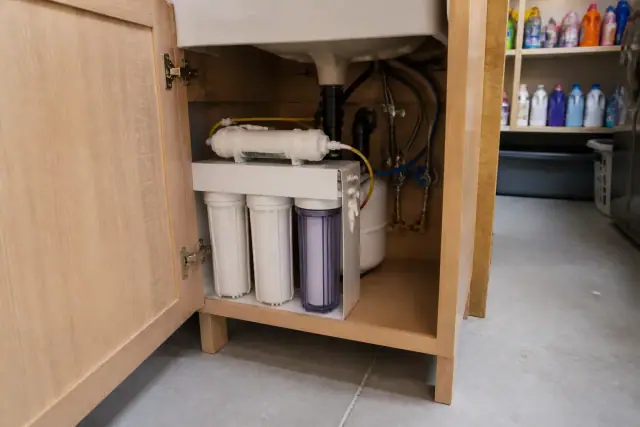
An under sink RO membrane, storage tank, dedicated faucet, and final remineralization cartridge. This helps readers see that mineral loss can be handled after filtration.
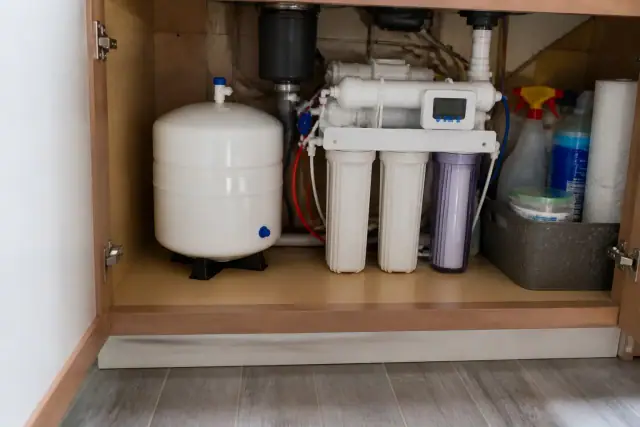
Source water, filtered water, and reject water moving through a point-of-use RO system. The visual should make the 2-4 gallons per 1 gallon trade-off and slower tank refill easy to understand.
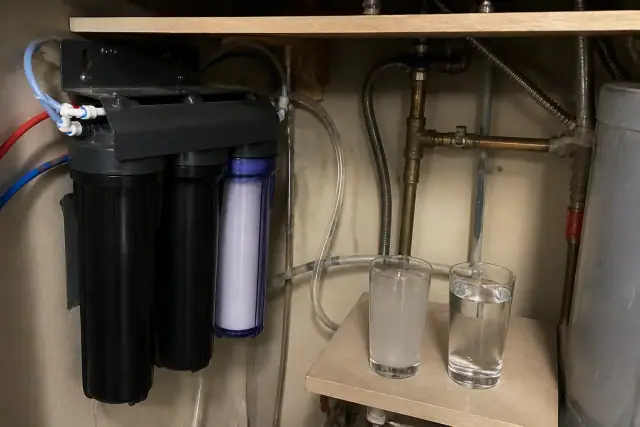
Tempe tap, RO filtered water, and remineralized RO water side by side. The comparison should focus on TDS, hardness minerals, taste, and contaminant reduction.
Start by deciding whether the goal is better drinking-water taste, lower TDS, or targeted reduction of contaminants such as lead, arsenic, nitrates, fluoride, chlorine, and chloramine. That answer helps separate under sink RO, countertop RO, and whole house treatment.
Diet, system type, water chemistry, and installation scope all matter. A household using RO for all drinking and cooking water should think more carefully about remineralization than someone using a small countertop unit occasionally.
Act when chlorine/chloramine taste, elevated TDS, flat RO taste, older plumbing concerns, or overdue filter service make the current setup questionable. Sediment and carbon pre-filters typically need replacement every 6-12 months, while RO membranes often last 2-5 years under normal conditions.
Do not choose or reject RO based on the claim that pure water pulls minerals from bones or organs. The more practical mistake is ignoring taste, wastewater, maintenance, and whether an NSF/ANSI 58 certified system with remineralization fits the household.
| Comparison Point | Typical Detail | What It Means |
|---|---|---|
| Tempe municipal tap | 300-500 ppm TDS with moderate hard water minerals. | RO can noticeably change taste, hardness, and dissolved-solids levels. |
| RO filtered water | 10-50 ppm TDS after the membrane. | Mineral content is very low, so taste may seem flat. |
| Remineralized RO | 50-150 ppm TDS after a final mineral stage. | Calcium or magnesium can be added back for a fuller taste. |
| Production waste | Standard point-of-use RO often uses 2-4 gallons of source water per gallon produced. | Efficient designs and maintenance matter in a desert climate. |
For Tempe households, the answer is usually about trade-offs rather than danger. RO can remove up to 99% of dissolved solids and address contaminants such as lead, arsenic, nitrates, chlorine, chloramine, and fluoride, but it also lowers minerals that contribute taste and body. Remineralized RO keeps the filtration benefit while making the finished water closer to the low-to-moderate mineral range many people prefer.
Budget, plumbing access, pressure expectations, and stage count can change the best setup. Countertop RO filters often sit around $150-$400, while under sink installs in Tempe commonly run $400-$1,200 depending on membrane quality, stage count, and remineralization; whole house systems cost more because they require added plumbing and storage. RO water can test slightly acidic at about pH 5.5-7 and residential systems usually fill a pressurized storage tank over several hours rather than delivering unlimited filtered water instantly.
Common follow-ups are whether RO removes fluoride, whether it improves pressure, how often filters need service, and whether the water is fine for plants or daily hydration. RO membranes reject fluoride with other dissolved solids, so dental needs should be handled separately from the filtration decision. RO usually creates a slight pressure drop at the tap, and annual filter service helps keep the system from drifting out of spec. For most households, daily drinking and plant use are acceptable when diet, electrolytes, and system maintenance are handled sensibly.
Share your water-quality concerns, household usage, and whether you are considering under sink, countertop, or whole house reverse osmosis. A local team can help compare mineral loss, taste, wastewater, maintenance, and remineralization before you choose a system.