Start With Test Results
The best first question is not which system to buy; it is what the test says about your source water. Ask for the Consumer Confidence Report or a certified lab analysis before comparing treatment equipment.
At Tempe Water Filtration, we help Tempe homeowners and business owners ask water questions that start with source, test results, and the problem they want to solve. A good conversation should cover taste, odor, hardness, health concerns, and whether a certified test points to whole-house filtration, reverse osmosis, softening, or another treatment path. In Tempe, that matters because municipal water blends Salt River Project and Central Arizona Project surface water with local groundwater, and hardness typically runs 15-18 grains per gallon. Use this guide to avoid buying equipment you do not need or overlooking a water-quality issue that deserves testing.
The best first question is not which system to buy; it is what the test says about your source water. Ask for the Consumer Confidence Report or a certified lab analysis before comparing treatment equipment.
Ask about named issues, including arsenic, TDS, chlorine, iron, bacteria, lead, sulfur odor, and hardness, because each one points to a different fix. A carbon filter, reverse osmosis system, softener, or sediment pre-filter should match the specific finding, not just the taste or smell.
Before signing, ask what NSF/ANSI certification applies, what maintenance will cost, and what warranty terms cover. Reverse osmosis is tied to NSF/ANSI 58, while NSF/ANSI 42, 53, and 61 answer different treatment and material questions.
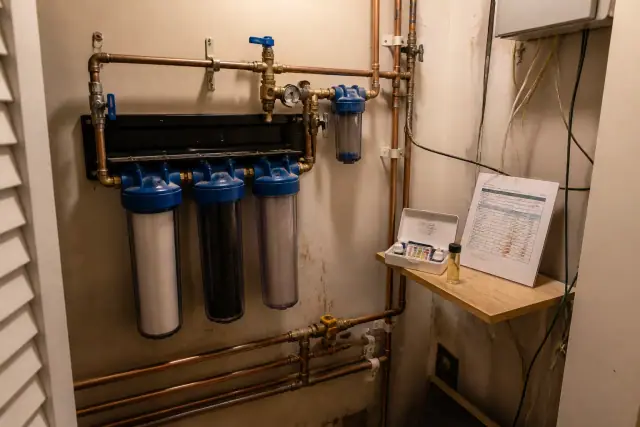
Sample bottles beside a readable test report for hardness, TDS, pH, chlorine, arsenic, iron, and bacteria. The visual should make clear that the numbers come before the equipment recommendation.
White mineral scale on a faucet, showerhead, or water heater connection in a Tempe home. This helps connect the local 15-18 GPG hardness range to a problem a customer can recognize.
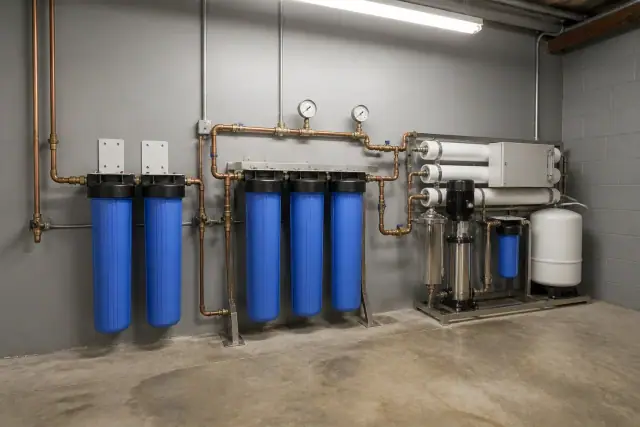
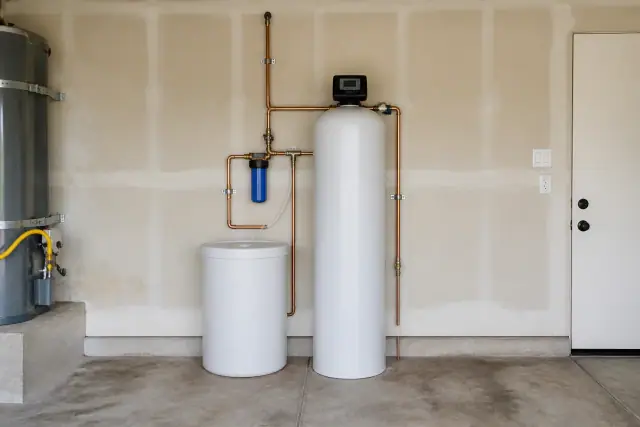
Whole-house filtration components next to an under-sink reverse osmosis setup. This image helps suggest that each system answers a different test result and use case.
Start with where the water comes from and whether you have current numbers. A certified lab test typically costs $150-$300, with sample collection, lab analysis in 3-5 business days, results review, and then a recommendation.
Source, property type, and the actual result change the answer. Municipal water, private well water, a restaurant near Tempe Town Lake, or a South Tempe home with hard-water scale may need different questions before equipment is chosen.
Act sooner when a test shows total coliform or E. coli, when lead at the tap is a concern, or when arsenic approaches the EPA's 10 parts-per-billion standard. Those questions move the conversation from comfort to health and safety.
Avoid treating cloudy water, metallic taste, or rotten-egg smell before confirming the cause. A sulfur odor may come from hydrogen sulfide in groundwater or a water heater anode rod reaction, and those fixes are different.
| Question | Source Detail | What It Guides |
|---|---|---|
| Where does the water come from? | Tempe blends Salt River Project and Central Arizona Project surface water with local groundwater. | Sets the baseline before comparing symptoms. |
| What do the numbers show? | Check hardness, TDS, pH, chlorine, arsenic, iron, and bacteria from a certified test. | Points the recommendation to testing, filtration, softening, RO, or monitoring. |
| Is this city water or a well? | Private wells need annual bacteria, nitrates, and arsenic testing because the owner is responsible. | Separates municipal report questions from health-related well testing. |
| What will the system cost over time? | Ask about NSF/ANSI 42, 53, 58, and 61, plus filters, salt, membranes, and warranties. | Prevents an equipment decision based only on upfront price. |
Good water questions move from symptoms to evidence. Instead of asking whether the water is safe in general, ask what the Consumer Confidence Report or lab numbers show for hardness, TDS, chlorine, arsenic, pH, and bacteria. That makes the answer useful for choosing between monitoring, filtration, reverse osmosis, softening, or a deeper plumbing or well follow-up.
Tempe's roughly 180,587 residents rely on a municipal blend of Salt River Project, Central Arizona Project, and groundwater, so source and season can affect taste, odor, and mineral content. Ask about pH between 6.5 and 8.5, chlorine residual typically in the 0.5-2.0 ppm range at the tap, and lead testing if the home was built before 1986. Private well questions should include annual bacteria, nitrates, and arsenic testing because those wells are not regulated under the Safe Drinking Water Act.
Useful follow-ups are about what to test, who regulates the source, which certification applies, and what the system will cost after installation. Whole-house softening and filtration typically runs $1,500-$5,000 installed, under-sink reverse osmosis typically runs $300-$600, and ongoing filter, salt, or membrane costs should be part of the estimate.
Send your water source, symptoms, and any test results before choosing equipment. Tempe Water Filtration can review the numbers with you and help confirm the next action for a Tempe home or business.